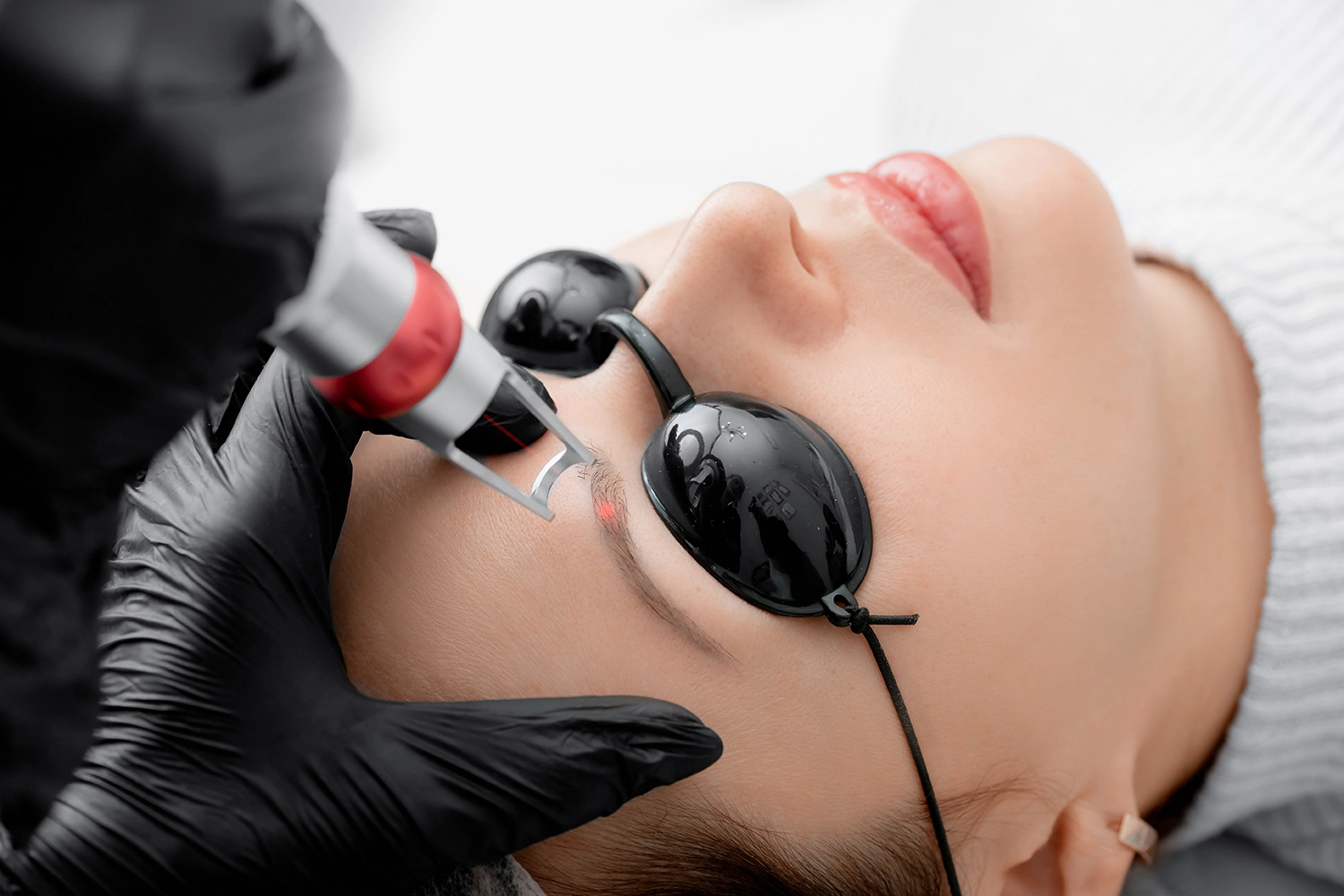
Laser technology has become essential in modern aesthetic clinics — from hair removal and tattoo fading to pigmentation correction and skin rejuvenation. But not all lasers are created equal. Each laser type has a specific wavelength, pulse structure, and target, making it crucial for clinics to understand which device suits which treatment and skin type.
In this guide, we break down the most commonly used aesthetic laser types: Alexandrite, Diode, Nd:YAG, Q-Switched, and Picosecond. Whether you're choosing a laser for your business or researching the best treatment for your skin concerns, this article gives you the insight you need.
The Alexandrite laser operates at a 755nm wavelength and is best known for its ability to treat fair to light olive skin types (Fitzpatrick I–III). It has a high melanin absorption rate, making it especially effective for laser hair removal, pigmented lesion treatment, and freckle fading. Due to its short wavelength, Alexandrite works best on lighter skin tones and less effective — or potentially risky — on darker skin types due to melanin competition.
Clinics that offer Alexandrite laser hair removal often praise its speed and efficiency. Its larger spot size and rapid repetition rates allow practitioners to treat larger areas like legs or backs in less time compared to older technologies. It also offers quick visual improvements for superficial pigmentation and sun damage, making it a go-to for skin brightening treatments.
That said, Alexandrite lasers aren’t ideal for all clients. Their strong absorption by melanin means they can cause unwanted pigment changes or burns on medium to dark skin tones. For this reason, many modern clinics use Alexandrite in combination with Nd:YAG or Diode lasers to cater to a broader client base.
Diode lasers are the gold standard for laser hair removal, offering deep penetration into the hair follicle with less risk to surrounding skin. Operating typically in the 800–810nm range, diode lasers are safe for a wider range of skin types, including Fitzpatrick II–V. Their balanced absorption in both melanin and water makes them a popular choice for facial and body hair treatments.
One of the key benefits of diode laser technology is its versatility and client comfort. Many modern diode machines (like BeautiMed's Dioluxe) include triple-wavelength technology (755nm, 808nm, 1064nm), which allows treatment of multiple hair types and skin tones in one session. Integrated cooling systems also enhance client experience by reducing heat and discomfort during the procedure.
Clinics appreciate diode lasers for their low maintenance, long lifespan, and strong ROI. These machines are built for speed and reliability — ideal for high-volume businesses offering fast, repeatable hair reduction with fewer side effects than earlier systems.
The Nd:YAG laser emits light at a 1064nm wavelength, which penetrates deeper into the skin than other aesthetic lasers. This makes it particularly effective for vascular lesions, spider veins, skin tightening, and laser hair removal on darker skin tones (Fitzpatrick IV–VI). The wavelength is less absorbed by melanin, meaning there’s lower risk of post-inflammatory hyperpigmentation (PIH).
Nd:YAG lasers are highly favoured for treating vascular concerns like telangiectasia, broken capillaries, and leg veins. The deep penetration also stimulates collagen remodeling, making this a powerful option for skin rejuvenation, particularly on mature or sun-damaged skin. Many clinicians combine Nd:YAG with other wavelengths in dual treatments for even more comprehensive results.
In the hair removal world, Nd:YAG is considered the safest choice for clients with darker skin, where Alexandrite or IPL systems would pose too much risk. Its ability to bypass surface melanin while still reaching the follicle gives practitioners a safer, more inclusive solution for permanent hair reduction.
Q-Switched lasers deliver short bursts of energy in nanoseconds, designed to break down pigment via a photoacoustic effect. They are most commonly used for tattoo removal, melasma, sunspots, and age spots. These lasers target pigment particles without significantly damaging surrounding skin, making them a go-to for pigmentation removal and tattoo fading.
Q-Switched lasers come in different wavelengths — typically 1064nm for dark ink and 532nm for red or orange pigments. Some systems offer 585nm and 650nm handpieces to treat green and blue inks, though these colours are more challenging. Clients usually require multiple sessions to see significant clearance, especially for professional tattoos.
While effective, Q-Switched lasers are considered an older technology compared to picosecond systems. They generally require more sessions, and while they’re still widely used in clinics, many professionals are now upgrading to picosecond lasers for better efficiency and results.
Picosecond lasers represent the latest advancement in laser technology, delivering ultra-fast pulses measured in trillionths of a second. These short pulse durations create an intense photoacoustic effect, shattering pigment into finer particles that are easier for the body to clear. Picosecond lasers are widely used for tattoo removal, pigmentation disorders, skin texture improvement, and even acne scarring.
Compared to Q-Switched lasers, picosecond systems offer faster results in fewer sessions, with less discomfort and lower risk of side effects. They also stimulate collagen, making them popular for skin rejuvenation and revitalisation treatments. Picosecond lasers with multiple wavelengths can also treat a full spectrum of ink colours, including hard-to-treat greens and blues.
It’s worth noting that some picosecond lasers still use Q-switching technology internally, which refers to the way energy is stored and released in high-intensity pulses. While the pulse duration is significantly shorter than traditional Q-switched lasers, the mechanism for generating the laser pulse can be similar. This hybrid approach combines the power of Q-switching with the speed of picosecond delivery — making these systems highly effective across a wide range of indications.
Each laser system has its strengths, and choosing the right one depends on your clinic's services, client demographics, and treatment goals. Alexandrite lasers are ideal for fast hair removal on lighter skin. Diode systems are reliable and versatile across a range of tones. Nd:YAG lasers provide depth and safety for vascular and melanin-rich applications. Q-Switched lasers are workhorses for pigment, while picosecond lasers represent the next generation of precision and performance.
At the top of the list, we believe picosecond lasers and diode lasers stand out as the most advanced and effective choice for modern clinics. Their speed, safety, treatment versatility, and visible results make them a smart long-term investment — both clinically and commercially.